


MORE THAN QUIRKS: WHY MY HERO ACADEMIA RESONATED WITH SO MANY FANS

By Matt

When people first look at My Hero Academia, it’s easy to assume the appeal is all about flashy powers, explosive battles, and superhero spectacle. And sure — the series absolutely delivers on all of that. But what made My Hero Academia stand out from so many other modern shonen series wasn’t just the action.
It was the people.
At its core, My Hero Academia is a story about flawed individuals trying to become better versions of themselves in a world that constantly tells them who they’re supposed to be. Beneath the giant robot fights and over-the-top Quirks is a surprisingly emotional story about fear, insecurity, perseverance, and the struggle to keep moving forward even when you feel completely inadequate.
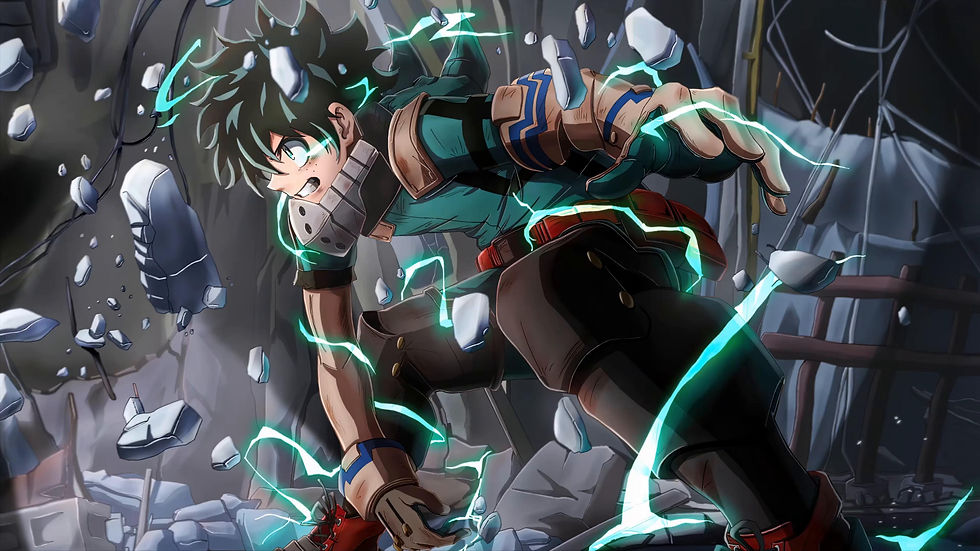
And nobody embodies that more than Izuku Midoriya.
Deku starts the series powerless in a world where power defines almost everything. He isn’t naturally gifted, confident, or physically capable of standing beside the heroes he idolizes. In fact, for a huge part of the story, he’s painfully self-destructive. But that’s what makes him compelling. His journey isn’t about suddenly becoming special — it’s about learning that courage exists before strength does.
Over and over again, Deku throws himself into impossible situations not because he believes he’ll win, but because he believes someone has to try.
That theme echoes throughout almost every major character in the series.
Bakugo could have easily remained a one-note rival character, but instead he became one of the most layered figures in the story. His aggression, arrogance, and obsession with victory all hide a crushing fear of weakness and failure. Watching Bakugo slowly learn humility, accountability, and emotional honesty became one of the strongest long-term arcs in the entire series. His growth never erased who he was — it refined him into someone stronger because he confronted his flaws instead of running from them.
Then there’s Shoto Todoroki, whose entire story revolves around identity and trauma. His struggle against the expectations forced onto him by his father gave My Hero Academia some of its most emotionally grounded moments. His evolution wasn’t about mastering fire or ice — it was about deciding for himself who he wanted to become outside of abuse, legacy, and resentment.
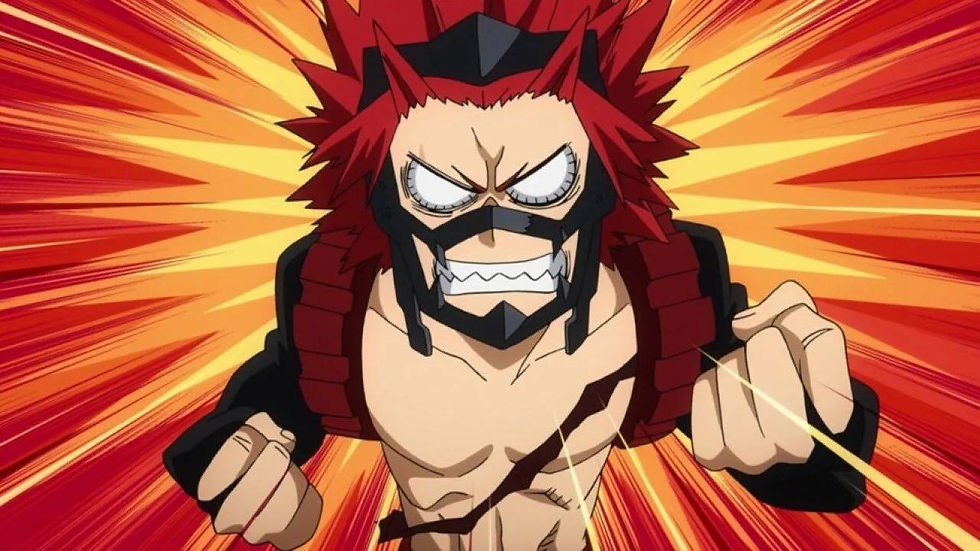
Even side characters often received the kind of emotional attention many anime reserve only for protagonists.
Characters like Ochaco Uraraka, Tenya Iida, Kirishima, and Tokoyami all represented different forms of insecurity and personal growth. Kirishima’s journey, in particular, became one of the series’ most powerful examples of overcoming fear. His definition of bravery wasn’t fearlessness — it was acting despite fear. That idea sits at the heart of the entire series.
And that’s ultimately why My Hero Academia connected with so many people.

The villains reinforced those themes too. Many of them weren’t evil simply for the sake of destruction. Characters like Shigaraki, Twice, and Toga reflected the failures of the society around them. They were broken people created by neglect, isolation, unrealistic expectations, or a system that only celebrated strength while ignoring emotional suffering. The line between hero and villain in My Hero Academia often came down to support, connection, and whether someone had another person willing to reach out to them before it was too late.
That emotional core gave the series weight beyond its superhero premise.
The world of My Hero Academia constantly asks difficult questions:What makes someone heroic?Is power alone enough?Can society truly protect everyone?How do people carry the expectations placed upon them without breaking?
The series didn’t always answer those questions perfectly, but it consistently cared enough to ask them.
And that sincerity mattered.
For many fans, My Hero Academia arrived during a time when stories about hope, self-worth, and perseverance hit especially hard. It became a series about people learning that being heroic doesn’t mean being fearless, flawless, or invincible. Sometimes it just means continuing to stand back up after life knocks you down again.
That’s why the characters stayed with people long after the fights ended.
Not because they had incredible Quirks.
But because their struggles felt human.


Comments